


Satin brass is the smoother, low-sheen finish that scatters light evenly and works almost anywhere. Brushed brass carries visible linear texture that hides fingerprints and small scratches, making it the more forgiving pick for busy kitchens and daily-use hardware. Both age differently depending on whether they’re lacquered or left raw, so your maintenance tolerance matters as much as your design taste.
TL;DR:
- Brushed brass features directional grooves that hide fingerprints and scratches, making it ideal for high-touch or textured design schemes.
- Satin brass provides a smooth, even sheen that looks consistent under different lighting conditions and suits modern, neutral interiors.
- Lacquered finishes resist tarnish and require less upkeep, while unlacquered brass patinas over time, offering a more aged or collected look.
- Finish names and tones vary across brands, so testing samples in your space under actual lighting is essential before purchasing.
- Both finishes are flexible for pairing with other metals, but mismatched sheen levels with high-polish or mirror finishes can appear inconsistent.
Table of Contents
- Brushed Brass vs Satin Brass: Spotting the Difference
- How Brushed and Satin Brass Are Actually Made
- Which Finish Holds Up Better Day to Day?
- Where Each Finish Belongs in Your Home
- What to Check Before You Commit to a Finish
- How Brushed and Satin Brass Age Over Time
- Why Sourcing From a Specialist Actually Saves You Guesswork
- Common Color and Tone Variations You’ll Actually Notice
- Do Brushed and Satin Brass Work With Other Metals?
- Cost Differences Between Brushed and Satin Brass
- Design Meets Maintenance: What Actually Matters Most
- See the Difference for Yourself Before You Buy
- Sources
- FAQ
Brushed Brass vs Satin Brass: Spotting the Difference
The fastest way to tell these two apart is to look for lines. Brushed brass has fine, directional grooves running across the surface, the result of a mechanical brushing process that leaves a texture you can feel with a fingertip, not just see. Those linear marks catch light unevenly, which gives the metal a warm, matte-to-satin look that shifts slightly depending on the angle you’re viewing it from.
Satin brass reads calmer. It’s smoother to the touch, with a soft, even sheen that doesn’t throw off the sharp highlights you’d get from polished brass. Because its surface scatters reflections rather than concentrating them, satin brass tends to look consistent whether you’re standing under a pendant light or natural window light. That consistency is part of why so many designers treat it as the safer, more neutral choice.
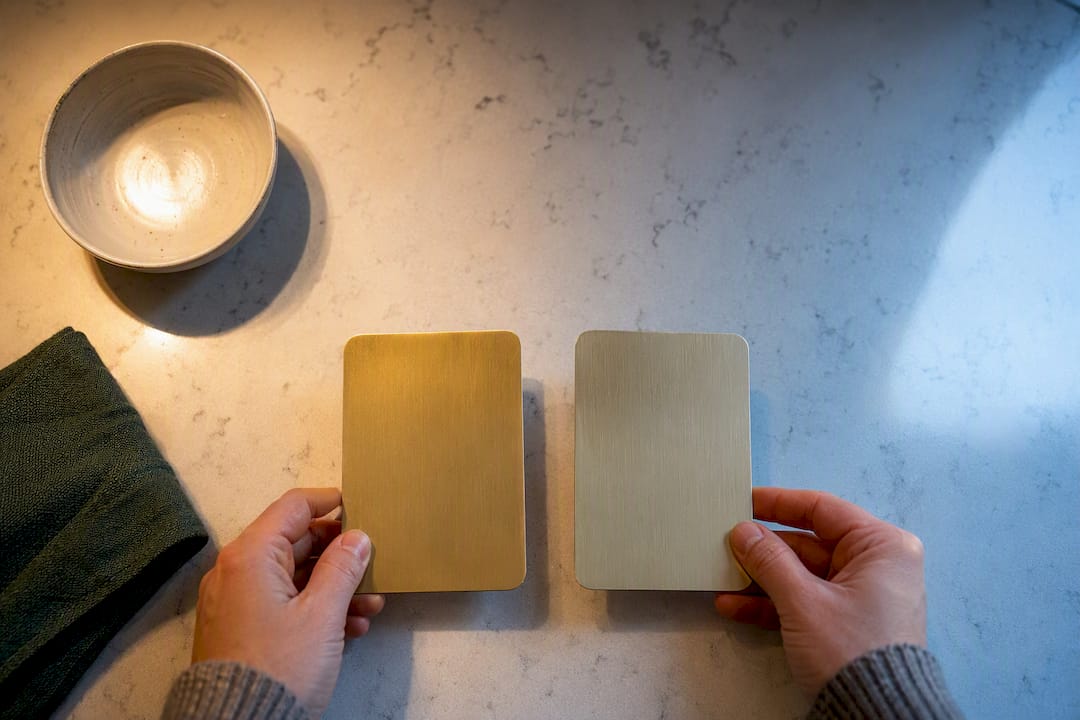
Undertone is where things get tricky. Two hardware pieces both labeled “satin brass” can lean warmer or cooler depending on the brand, the base alloy, and the coating process. Here’s a simple way to compare finishes before you commit:
- Hold samples together in the room where they’ll live, not under store lighting.
- Check them in morning light, midday light, and after dark under your actual bulbs, as lighting can significantly change appearance.
- Run a finger across the surface. Brushed brass has a subtle ridge pattern; satin brass feels flatter.
- Photograph both side by side on your phone. Cameras exaggerate undertone differences that your eye might smooth over.
- Ask the retailer whether the piece is lacquered, since that changes both color depth and long-term upkeep.
Pro Tip: Order two or three finish samples before you order a full set of hardware. What looks like a close match on a screen can read noticeably warmer or cooler once it’s sitting next to your actual cabinetry.
How Brushed and Satin Brass Are Actually Made
Both finishes start as the same base metal. What happens after that is where the naming gets confusing, and it’s worth understanding the process so you know what you’re actually buying.
Brushing is mechanical. A wheel or abrasive belt is run across the brass surface in one direction, cutting shallow parallel lines into the metal. That texture does double duty: it creates the visual grain designers love, and it physically interrupts the surface enough that fingerprints and light scratches become harder to spot.
Satin finishes are usually achieved through a lighter abrasive or chemical process, sometimes combined with plating, that smooths the surface without leaving directional grooves. The result is that low, even glow instead of brushed texture.
The bigger fork in the road is lacquer. A lacquered finish gets sealed with a clear protective topcoat that locks in the current color and blocks oxidation. Lacquered brass resists tarnish and needs far less upkeep than unlacquered brass, which will darken and develop patina as it’s exposed to air, moisture, and skin oils over time.
Here’s the part that trips up a lot of shoppers:
- There’s no industry standard defining “brushed” or “satin.” One manufacturer’s satin brass might look like another’s brushed brass.
- Finish names and tones vary by brand, so a name on a spec sheet tells you less than an actual sample in hand.
- Lacquered and unlacquered versions of the same finish name can behave completely differently after a year of use.
- Always confirm coating status directly with the seller rather than assuming from the product title.
Which Finish Holds Up Better Day to Day?
Fingerprints and water spots are the two things people notice first, and the finishes handle them very differently. Brushed brass’s texture works in your favor here: the directional grooves break up smudges and light surface scratches, which is why brushed finishes tend to hide daily wear better than polished or highly reflective surfaces. Satin brass is smoother, so it shows fingerprints a bit more readily, though its low sheen still hides them better than a mirror-polished finish would.
Lacquer is the bigger variable. A sealed, lacquered piece resists tarnish and wipes clean easily. An unlacquered piece will show fingerprints as faint oxidation marks that build into patina, which some homeowners want and others find frustrating on a faucet they touch five times a day.
For rooms with steam, humidity, and frequent cleaning, the coating matters more than the texture. Satin or sealed finishes generally need less upkeep than polished brass in kitchens and bathrooms, where moisture and cleaning chemicals accelerate wear on any exposed, unsealed metal.
A simple cleaning routine works for most finishes:
- Wipe weekly with a soft microfiber cloth and warm water. Skip anything abrasive.
- For lacquered pieces, a drop of mild dish soap handles grease and fingerprints without touching the sealed coating.
- For unlacquered pieces, avoid vinegar, ammonia, or citrus-based cleaners. They’ll strip developing patina unevenly.
- Dry immediately after cleaning bathroom hardware to prevent water spotting on satin surfaces.
- Never use steel wool, scouring pads, or bleach on either finish.
Bathrooms and kitchens deserve extra thought here. Humidity and repeated exposure to cleaning products speed up finish wear in wet zones, so if you’re outfitting a shower or a kitchen faucet, lean toward a sealed or satin option unless you’re genuinely prepared for patina to develop.
Where Each Finish Belongs in Your Home
Satin brass earns its reputation as the safe pick because it plays well with almost any palette. It’s especially strong in modern and transitional kitchens with mid-tone wood cabinetry, marble or quartz counters, and mixed-metal fixtures, since its calm sheen doesn’t compete with busier surfaces. Bathroom vanity lighting and faucets are another natural fit, particularly where you want warmth without shine.
Brushed brass shows its strength in spaces built around texture. Industrial-style kitchens, exposed brick, linen upholstery, and matte tile all pair naturally with brushed hardware because the finish’s grain echoes those tactile surfaces. Cabinet pulls, drawer hardware, and door hardware are also smart candidates for brushed brass specifically because that texture hides the scuffs and fingerprints high-touch pieces inevitably collect.
A few quick pairings worth keeping in mind:
- Satin brass sconces alongside a soft matte black range hood create contrast without visual noise.
- Brushed brass cabinet pulls on painted shaker cabinets add warmth without looking too formal.
- Antique brass vs satin brass is really a question of mood: antique brass already carries simulated age and patina, while satin brass stays crisp and current.
- Avoid pairing either finish with high-polish, mirror-bright brass in the same sightline. The contrast in sheen usually looks like a mismatch rather than an intentional layer.
If you’re weighing matte black vs oil rubbed bronze hardware against a brass finish elsewhere in the same room, keep the sheen levels similar. A matte black faucet next to a brushed brass mirror frame works because both are low reflectivity; oil rubbed bronze hardware against polished brass tends to fight for attention instead.
What to Check Before You Commit to a Finish
A finish that looks perfect on a product page can disappoint in your actual kitchen, so run through this short list before ordering:
- View the sample in your room, not the showroom. Light temperature and bulb type change how brass reads, so test swatches at different times of day under your own fixtures.
- Confirm lacquered vs unlacquered status. Ask directly. Product titles alone won’t always tell you.
- Check the return and sample policy. A retailer that lets you order swatches before committing to full sets saves you an expensive reorder.
- Match undertones across every fixture in the sightline. Faucet, cabinet pulls, and lighting should share a consistent warmth, even if they come from different product lines.
- Ask about wear expectations for your specific room. A tradesperson or retail specialist can tell you how a finish performs in high-moisture versus low-traffic areas.
Pro Tip: When coordinating sinks, taps, hardware, and lighting across a full renovation, order all your brass samples at once and lay them side by side on the actual counter or cabinet face. Comparing them individually over separate weeks makes small undertone mismatches much easier to miss.
How Brushed and Satin Brass Age Over Time
Lacquered brass, whether brushed or satin, stays close to its original color for years because the sealed topcoat blocks the oxidation that causes tarnish. Unlacquered brass tells a different story. It darkens gradually, developing the warm, mottled patina that some homeowners specifically seek out for an aged, collected look.
Whether that aging reads as desirable or disappointing depends entirely on expectations set before purchase. If you want your unlacquered satin brass faucet to look exactly as bright in five years as it does today, you’ll be unhappy. If you’re drawn to the way old brass hardware looks in a century-old farmhouse, unlacquered is the finish that gets you there naturally.
A few care basics keep either finish looking its best:
- Skip abrasive pads, bleach, and harsh acidic cleaners on both lacquered and unlacquered pieces.
- Polish unlacquered brass occasionally if you want to slow patina, or leave it alone if you want the aged look to progress.
- Re-lacquering is possible but usually requires a professional, since a poorly applied topcoat traps moisture and causes uneven blotching.
- A light coat of paste wax can add temporary protection to unlacquered brass between cleanings.
Why Sourcing From a Specialist Actually Saves You Guesswork
Since finish names vary so much from brand to brand, the smartest move is working with a retailer that can show you real samples side by side instead of relying on a product description. You can compare brushed and satin brass across lighting and hardware lines from multiple brands in one place rather than piecing it together from a dozen different sites.
A fully illuminated showroom lets you see how each finish actually behaves under real light. If you’re a designer or contractor managing multiple fixtures across a project, a trade program may offer access to project pricing and support for matching finishes consistently from room to room. Before you order, request samples, confirm lacquer status directly with the team, and check current fixtures like the Sabon LED Pendant to see how brushed brass reads on lighting specifically, not just hardware.
Common Color and Tone Variations You’ll Actually Notice
Brushed brass tends to sit slightly darker and warmer in appearance than satin brass, though this isn’t a hard rule since it depends heavily on the base alloy and how deep the brushing cuts run. The texture itself affects perceived color: those directional grooves create tiny shadows across the surface, which can make brushed brass look a shade richer or more golden than a satin piece made from the identical alloy.
Satin brass, by contrast, often reads slightly cooler and more even because there’s no texture breaking up the light. Some satin brass finishes lean toward a champagne or pale gold tone, while others sit closer to a warmer honey brass. This is exactly where the lack of industry standardization causes real confusion for buyers comparing options across brands.
The lighting in your space changes both finishes more than most people expect. Warm LED bulbs push brushed and satin brass toward a richer gold. Cool daylight bulbs or north-facing windows can make the same piece look noticeably paler and grayer. This is one more reason a swatch under store lighting tells you less than a swatch on your own kitchen counter at 7 p.m. with your actual fixtures on.
Do Brushed and Satin Brass Work With Other Metals?
Mixing metals is standard practice in modern interiors, and both brushed and satin brass pair comfortably with a range of other finishes, though some combinations work harder than others.
Satin brass sits particularly well next to matte black, aged bronze, and brushed nickel, since all of these share a similarly muted reflectivity. That shared sheen level keeps a room feeling coordinated even when the actual metals differ. Brushed brass follows the same logic. It pairs naturally with oil rubbed bronze hardware, matte black fixtures, and other brushed metals like brushed nickel or brushed stainless, because the textures and light behavior are close enough to feel intentional rather than accidental.
Where mixing gets risky is combining either finish with high-polish chrome or mirror-bright brass in the same sightline. The contrast in shine level tends to look like a mismatch instead of a deliberate design layer. If you already have polished chrome plumbing fixtures and you’re adding brass hardware, satin brass is usually the gentler transition since its lower sheen doesn’t compete as directly with the chrome’s brightness.
A good rule for any multi-metal room: pick one dominant finish for the largest fixtures, then let one or two accent metals repeat in smaller doses like drawer pulls or picture frames.
Cost Differences Between Brushed and Satin Brass
Price differences between brushed and satin brass usually come down to the manufacturing process and coating rather than the finish name itself. Brushing requires an extra mechanical step, which can add modestly to production cost compared with a simpler satin process, though this varies significantly by manufacturer and product line.
The bigger cost driver is lacquer. A lacquered piece typically costs more upfront than an unlacquered equivalent because of the sealing process, but it usually saves money over time through reduced cleaning products and fewer replacements from visible wear. Unlacquered brass costs less initially but demands more ongoing care, and if you eventually want it re-lacquered, that’s an added professional expense down the road.
Brand and product line matter more than finish type when it comes to final price. A satin brass faucet from a premium designer line will almost always cost more than a brushed brass equivalent from a budget line, regardless of which finish you’re comparing. Rather than budgeting around finish type alone, factor in lacquer status and brand tier, since those two variables affect your wallet more than whether the surface is brushed or satin.
Design Meets Maintenance: What Actually Matters Most
Most guides treat brushed brass vs satin brass as a pure style decision, and that’s where the conventional advice falls short. The finish you choose is really a maintenance commitment disguised as a design choice. A homeowner who picks unlacquered satin brass for its clean look but expects it to stay bright for a decade is setting themselves up for disappointment that has nothing to do with the finish itself and everything to do with mismatched expectations.
What we’d prioritize first isn’t sheen level or trend appeal. It’s answering one honest question: how much upkeep are you actually willing to do? If the answer is “not much,” lacquered satin brass in kitchens and bathrooms is the pragmatic default. If you like the idea of hardware that ages and tells a story, unlacquered brushed brass in lower-moisture areas rewards that patience. Style should follow that decision, not the other way around. Test real samples in your actual light before committing to either.
— Montreal Lighting & Hardware
See the Difference for Yourself Before You Buy
Photos and finish names only get you so far, since the same “satin brass” label can look warmer on one product and cooler on another depending on the brand behind it. A fully illuminated showroom allows comparison of brushed and satin brass side by side under real light, plus some retailers offer trade programs that provide project pricing and support matching finishes across an entire renovation.
If you’re ready to compare finishes in person, browse cabinet and bathroom hardware to see brushed and satin brass options together, or check lighting fixtures like the Crystorama cast brass wall mount to see how brushed brass reads on a fixture you’d actually hang. Order samples before you commit to a full set, and ask the team directly whether a piece is lacquered so you know exactly what kind of upkeep you’re signing up for.
Sources
- Types of Brass Finishes (Brushed vs Satin vs Polished Brass)
- Polished vs Satin vs Antique Brass: How to Pick the Right Finish for Your Interior
- How To Choose Between Lacquered vs Unlacquered Brass - THE WHITE LAUREL
- Brass Finishes Explained: Types, Uses, and How to Choose
FAQ
Is Brushed Brass Outdated?
No. Brushed brass remains part of a broader, ongoing return to warm metals in interior design, and its texture makes it especially practical for hardware in busy households.
Is Brushed Bronze a Better Finish Than Satin Brass?
Neither is objectively better. Matte black vs oil rubbed bronze and brushed bronze options tend to hide fingerprints well like brushed brass, but satin brass reads warmer and pairs more easily with gold and champagne-toned fixtures.
Which Brass Finish Is Best?
It depends on your maintenance tolerance and room. Satin brass is the more forgiving, versatile default for most homes, while brushed brass is the stronger pick for high-touch hardware where hiding scratches and fingerprints matters most.
Is Satin Brass Still in Style?
Yes. Satin brass continues to read as modern and adaptable, and its calm, even sheen keeps it from clashing with the mixed-metal palettes common in current kitchen and bathroom design.
What’s the Real Difference Between Lacquered and Unlacquered Brass?
Lacquered brass has a sealed protective topcoat that resists tarnish and needs less maintenance, while unlacquered brass develops natural patina over time and requires more careful cleaning to avoid uneven wear.
