

Use IP65 or higher for any fixture exposed to shower spray, and treat IP67 or higher as necessary only for fixtures that sit inside a steam shower or could face direct water pooling. Look for a damp rating like IP44 only on fixtures placed outside the splash zone; such ratings are not suitable for use inside the splash zone. Before you buy anything, confirm the product carries a CSA, cUL, or cETLus mark with a wet location listing, and talk to a licensed electrician about your specific layout.
TL;DR:
- For fixtures in shower stalls or areas exposed to direct water jets, select at least IP65 rated lighting; for inside steam rooms or pools, IP67 or higher is necessary.
- Mounting location within bathroom zones determines the required IP rating, with Zone 0 needing IP67 or above and Zone 2 often suitable with IP44 or IP65.
- Proper installation, sealing, gasket integrity, and certification marks like CSA or cUL are crucial to ensure the rating remains effective over time.
- GFCI protection and adherence to local electrical codes are mandatory for safe circuit operation near water.
- Material choice, especially corrosion-resistant trims and proper wet-location rated trim and housing, influences fixture longevity in humid bathroom environments.
Table of Contents
- What Does a Shower Light Rating Actually Mean?
- Bathroom Zones and What Canadian Code Expects
- Choosing and Installing a Shower-Rated Fixture the Right Way
- Which Fixture Style Fits Your Shower?
- Montreal Lighting & Hardware’s Take on Shower-Safe Lighting
- What Homeowners Get Wrong About Shower Light Ratings
- Ready to Shop for Shower-Rated Lighting?
- Sources
What Does a Shower Light Rating Actually Mean?
An IP rating is written as two digits, and most homeowners only ever look at the first one. That’s a mistake, because the first digit covers protection against dust and solid objects, while the second digit is the one that matters in a bathroom: it measures resistance to water. The IP Code set by the International Electrotechnical Commission is the standard behind every one of those markings, so an IP65 fixture sold in Vancouver means the same thing as one sold in Melbourne.
Here’s how the water digit breaks down in practical bathroom terms:
- 4 — splash resistant. Fine for a vanity light a few feet from the tub, not fine directly over a shower head.
- 5 — protected against low-pressure water jets from any direction. This is the practical floor for anything inside your shower enclosure.
- 6 — protected against powerful jets, sometimes seen on higher-end fixtures.
- 7 — protected against temporary immersion, relevant for fixtures near a soaker tub or steam room floor.
- 8 — protected against continuous immersion, rarely needed for lighting outside of pools or fountains.
According to Victorian Plumbing’s bathroom lighting guide, IP44 handles splashes while IP65 is built to withstand direct water jets, making IP65 the safer choice for a shower stall.
Pro Tip: A number on a spec sheet doesn’t tell you everything. A fixture rated IP65 out of the box can fail that rating within a year if the trim gasket gets pinched during installation or the lens seal cracks from repeated heat cycling. The rating describes the product as tested, not as installed, which is why materials, seals, and the actual “wet location” listing on the box matter just as much as the two digits.
Bathroom Zones and What Canadian Code Expects
Electricians and lighting designers talk about bathrooms in terms of zones, and each zone carries its own practical minimum rating. Understanding where your shower fixture sits changes which rating you actually need, and it explains why the same bathroom might reasonably use three different lighting products.
- Zone 0 covers the inside of the bath or shower enclosure itself, including the floor of the stall. Anything here needs the highest protection available, generally IP67 or higher, since it can face direct water contact and occasional standing moisture.
- Zone 1 extends vertically above the tub or shower, roughly to head height or higher. This is where most shower ceiling lights sit, and IP65 is the widely recommended minimum for protection against water jets from any angle.
- Zone 2 covers the area extending outward from the tub or shower, roughly an arm’s length beyond the enclosure. Fixtures here can often use a lower rating like IP44, though many electricians still prefer IP65 for consistency and peace of mind.
Canadian inspectors don’t grade fixtures on IP numbers alone. They look for certification marks: CSA, cUL, or cETLus, stamped directly on the fixture or its documentation. The National Electrical Code’s bathtub and shower section defines the shower zone as extending 900 millimeters horizontally and 2.5 meters vertically from the tub or shower, and it explicitly bans cord, chain, or cable-suspended fixtures inside that space. Canadian electrical practice follows the same logic, which is one reason you’ll rarely see a hanging pendant directly over a shower stall, even in a bold, design-forward bathroom.
Circuit protection matters too. Any lighting circuit near water should run through GFCI (ground fault circuit interrupter) protection, and your local authority having jurisdiction may have specific requirements beyond the national baseline. A quick call to your municipal building department before you buy saves you from a failed inspection later.
Choosing and Installing a Shower-Rated Fixture the Right Way
Getting the rating right on paper is only half the job. The other half is making sure that rating survives the actual installation, since a perfectly good IP65 fixture installed poorly behaves like a much weaker one.
Start with the shopping list:
- Confirm the IP rating matches your zone (IP65 minimum for Zone 1, IP67 or higher for Zone 0).
- Check the housing and trim materials for corrosion resistance, since bathroom humidity is relentless on cheap metal finishes.
- Verify the trim itself is wet-location rated, not just the housing above the ceiling line, since the visible trim is often what determines real-world compliance.
- Match lumen output and color temperature to the room. A soft 2700K to 3000K glow suits a relaxing shower far better than a stark daylight tone.
- Look for CSA, cUL, or cETLus certification directly on the product, not just marketing language like “waterproof.”
Installation is where good fixtures quietly fail. A gasket that gets pinched during mounting, a trim that never fully seats flush against the ceiling, or a driver left exposed in the ceiling cavity can all undo an otherwise solid rating. Sealed or remote-mounted drivers, positioned outside the direct spray path, tend to last longer than drivers packed into the same housing as the light source.
Pro Tip: Ask your electrician to test the trim seal by running the shower on hot for a full cycle before calling the job finished. Steam finds gaps that a quick visual check misses.
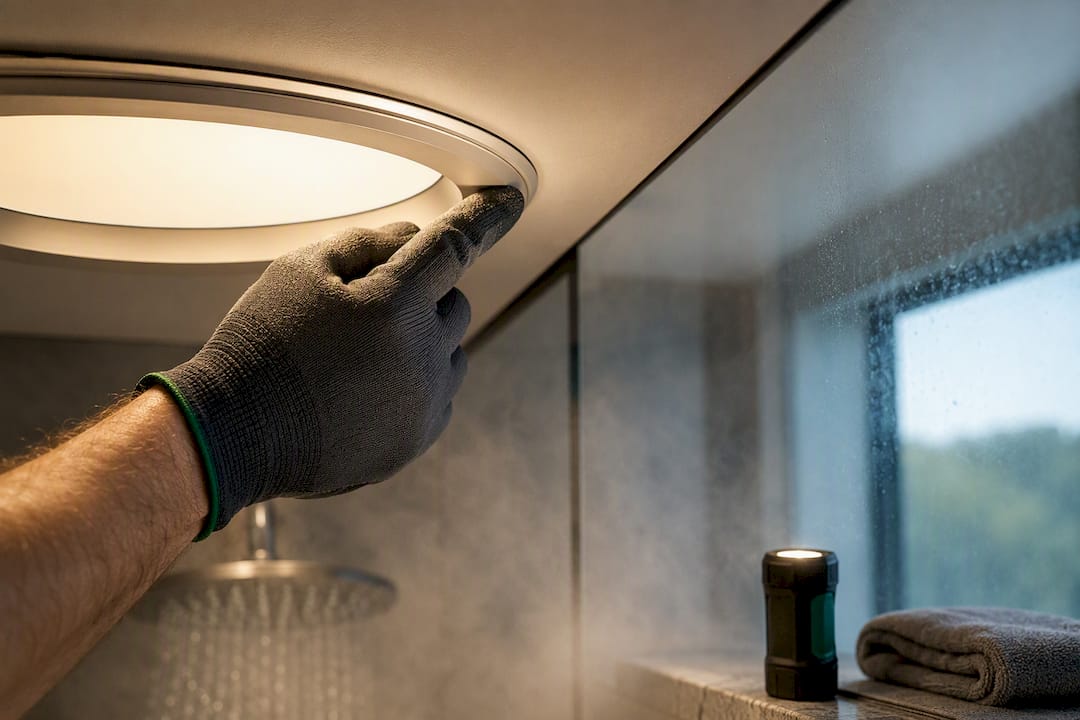
Three mistakes show up again and again in shower lighting: using a damp-rated (IP44) fixture inside the actual shower zone, installing a pendant or cord-hung fixture where code prohibits it, and skipping GFCI protection on the circuit. Each one is an easy fix if caught early. A licensed electrician who understands your specific bathroom layout, including door swing, ceiling height, and your local code, is worth the consultation fee. For broader guidance on how sealing and material choices hold up in wet bathroom environments, this partner resource on bathroom door materials covers similar sealing principles that apply well beyond just doors.
Which Fixture Style Fits Your Shower?
Not every wet-rated fixture looks the same, and Canadian homes tend to gravitate toward a handful of proven styles.
- Sealed recessed downlights are the default choice directly over a shower stall. IP65 has become the practical standard here because the fixture sits flush with the ceiling, catching spray head-on.
- Surface-mounted sealed domes and integrated LED modules work well in smaller bathrooms or where recessed housing isn’t feasible. IP65 covers most installations, but IP67 is worth the upgrade if the fixture sits inside a steam shower.
- LED strips and niche lighting used in shower shelving or steam room accents should carry IP67 or IP68, paired with a low-voltage transformer kept well outside the wet zone.
- Vanity bars just outside the shower area can use a lighter IP44 rating, since they’re typically in Zone 2 or beyond splash range.
Material choice affects how long any of these hold up. Stainless steel trims resist corrosion far better than painted aluminum, and matte finishes tend to hide water spotting better than polished chrome over time.
Montreal Lighting & Hardware’s Take on Shower-Safe Lighting
IP65 is recommended as the practical floor for any shower-exposed fixture, even in cases where a slightly lower rating might technically pass inspection. That small buffer accounts for years of steam, cleaning products, and the wear that comes with daily use, not just the fixture’s rating on day one.
Product pages often note certification details so you can compare options without guesswork, and trade programs may give designers and contractors direct access to specification support. With fast shipping and a current warehouse sale offering up to 50% off, there’s rarely a reason to settle for a fixture you’re not fully confident in. If you’re unsure which rating your bathroom layout actually requires, it’s advisable to seek guidance from showroom teams or trade support before ordering.
What Homeowners Get Wrong About Shower Light Ratings
Most guides treat the IP rating like a finish line. Buy the right number, install it, done. That’s incomplete advice, and it leads to real failures.
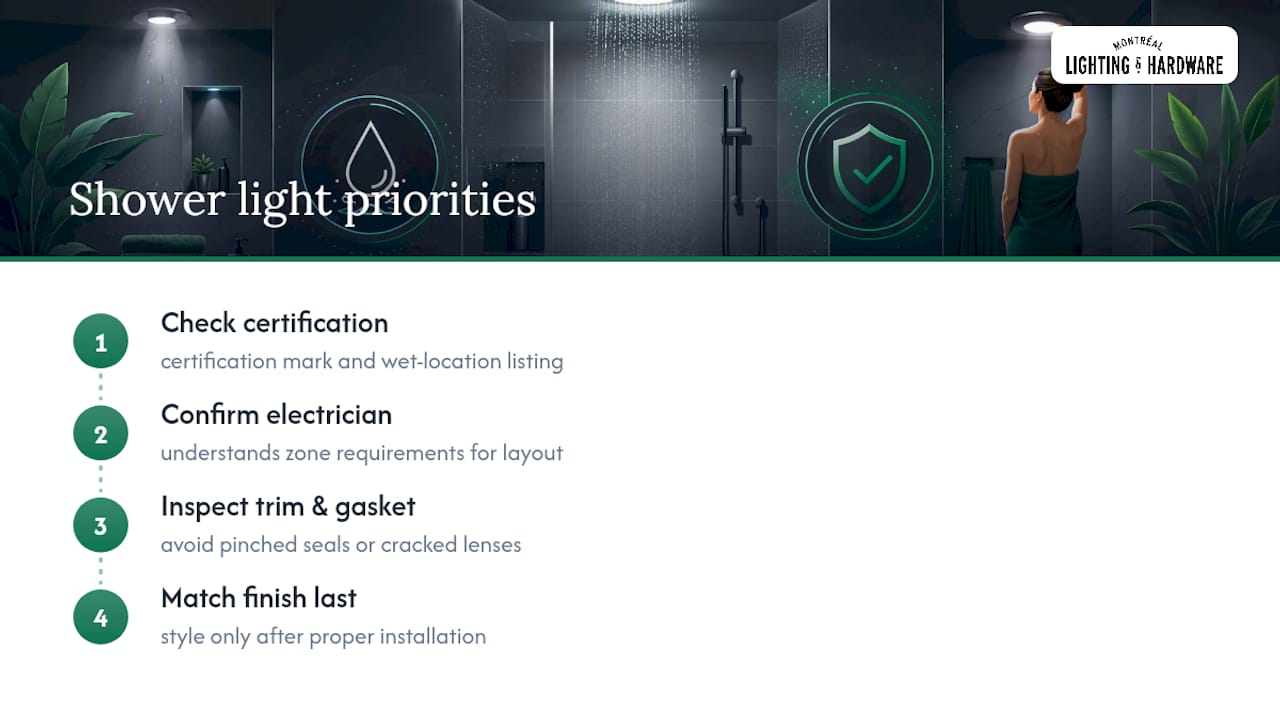
The research is consistent on this: trim and gasket quality often matter as much as the IP number itself. A high-rated fixture with a pinched seal or a cracked lens performs worse than a properly installed mid-range one. Canadian homeowners fixate on finding the “right” number, when the bigger risk sits in the installation details nobody photographs for a home renovation account.
Our advice: prioritize the certification mark and wet-location listing first, then confirm your electrician understands zone requirements for your specific layout, and only after that, worry about matching finish and style. A beautiful fixture installed wrong is a liability wearing a nice trim ring.
— Montreal Lighting & Hardware
Ready to Shop for Shower-Rated Lighting?
Once you know the rating you need, finding a fixture that matches your bathroom’s style shouldn’t feel like another research project. Montreal Lighting & Hardware lists certification and wet-location details directly on product pages for options like sealed surface-mount LEDs, so you can compare ratings side by side with the finish and light output you actually want.

For vanity areas just outside the shower zone, a piece like the Sonneman Vanity LED Bath Bar fits Zone 2 requirements while still bringing designer style to the room. If you’re mid-renovation and need confirmation on a rating before committing, consulting with trade support teams or showroom staff is recommended. Browse the current shower-rated fixture selection or reach out to our team for specification help before your next order ships.
Sources
- Engineerskill
- 410.10(D) Bathtub and Shower Areas.
- Bathroom Lighting Buying Guide | Victorian Plumbing
- Shower Light — Wet-Location Ratings, Types, and Replacement | Jaspector
- IP Code - Wikipedia
