


Light your home office in three layers, ambient, task, and accent, anchored by a quality adjustable desk lamp. Aim for roughly 500 lux at the work surface, a daytime color temperature near 4000K, and a Color Rendering Index (CRI) sufficient to render colors accurately and reduce eye strain, with higher values preferred for color-sensitive tasks. That combination is what actually reduces eye strain and makes you look sharp on camera. Lighting retailers can help you find the fixtures to make it happen.
TL;DR:
- Achieving roughly 500 lux at the desk with a color temperature near 4000K and high CRI lighting improves eye comfort and camera appearance.
- Proper layering involves installing ambient overhead lighting first, then task lamps, and finishing with accent lights for depth and visual warmth.
- A high-quality, tunable desk lamp with sufficient lumens, flicker-free drivers, and a high CRI is essential to reduce eye strain and enhance color accuracy.
- Ambient fixtures should match room size and ceiling height, favoring diffusion and dimmer compatibility to prevent visual clutter and mood disruptions.
- Bias lighting behind monitors and key-light placement at 45 degrees improve camera presence, reduce shadows, and lessen eye fatigue during video calls.
Table of Contents
- Home Office Lighting Ideas Start With Three Layers
- Task Lighting: Choosing and Positioning the Right Desk Lamp
- Ambient and Overhead Options for Every Room Type
- Accent Lighting That Finishes the Room and Flatters the Camera
- Lighting for Screens and Video Calls
- Specs Cheat Sheet: What the Numbers Actually Mean
- Three Quick Setups Based on Your Room
- Where to Find the Right Fixtures and Advice
- An Editor’s Checklist for a Camera-Ready Office
- Shop the Fixtures That Match These Specs
- Sources
Home Office Lighting Ideas Start With Three Layers
Every well-lit workspace runs on three coordinated layers: ambient light fills the room, task light targets your work surface, and accent light adds depth and takes the edge off harsh contrast. Skip a layer and you feel it. A room lit only by an overhead fixture throws hard shadows across your keyboard, while a desk lamp with no ambient support turns your monitor into the brightest object in a dark room, a setup that strains your eyes fast.
Layering also matters for how you look on video calls. A room with only one light source tends to create uneven shadows on your face, while balanced ambient and task light smooths things out considerably.
If you’re building from scratch, tackle the layers in this order:
- Overhead first. Get your ambient base right before anything else.
- Task lighting second. This is where most of the comfort gains happen.
- Accent lighting last. Treat it as the finishing touch, not the fix.
Task Lighting: Choosing and Positioning the Right Desk Lamp
The desk lamp is the single highest-impact purchase you can make for a home office. Bad task lighting is directly tied to the eye strain that plagues people who spend all day at a screen, and a good lamp fixes more of that than any other change.
When you’re shopping, prioritize these features in order:
- Lumens and lux output. Look for a lamp that can push your desk toward that 500 lux target without you needing it cranked to maximum.
- Tunable color temperature. You want the option to shift from cool daytime light to something warmer in the evening.
- Dimmability and flicker-free drivers. Flicker you can’t consciously see still tires your eyes over a long day.
- High CRI (90+). This affects how accurate colors look, which matters if you do any design or photo work.
For form factor, an articulating arm lamp gives you the most control over angle and reach, a clamp lamp saves desk space on smaller surfaces, and a monitor-mounted light bar sits above your screen and lights the desk without spilling glare onto the display, a smart pick if your desktop real estate is already tight.
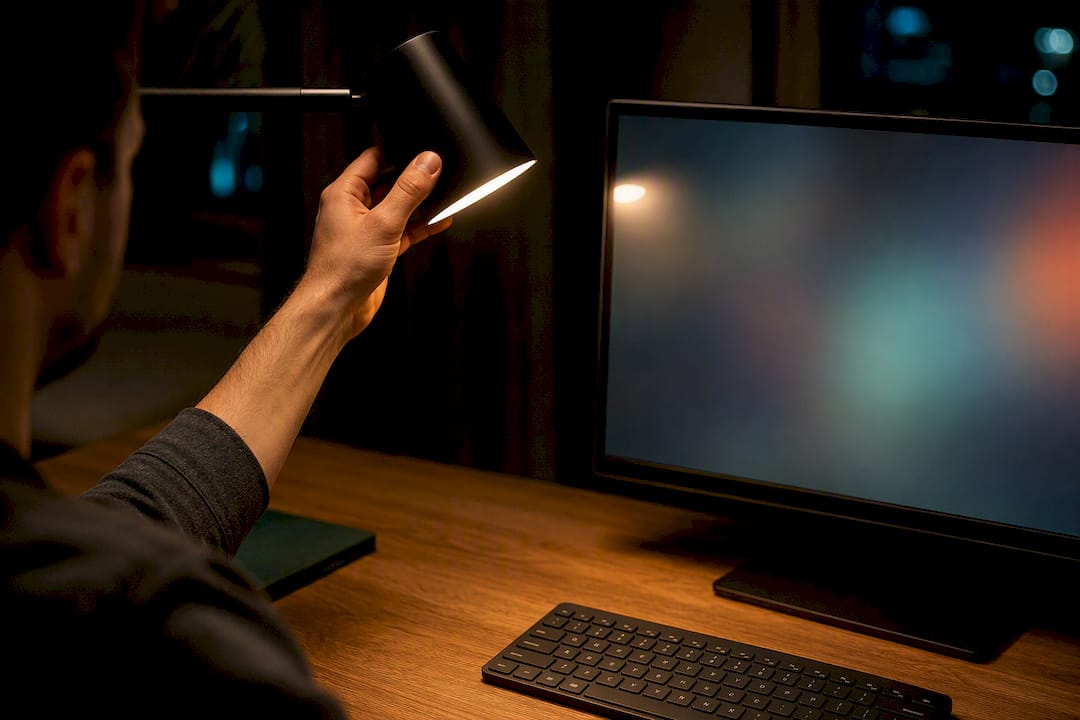
Whatever you choose, place it on your non-dominant side with the light source above eye level, angled so it never reflects directly off your screen.
Pro Tip: Test lamp placement at night with the room lights off. If you can see a bright reflection of the bulb in your monitor, move the lamp back or angle the shade down before you commit to that spot permanently.
Ambient and Overhead Options for Every Room Type
Your ceiling height and room size should drive your ambient fixture choice more than style preference alone. A low ceiling calls for a flush mount or recessed lighting so you don’t lose headroom or create visual clutter. Taller ceilings give you room to hang a pendant or semi-flush fixture, which adds character while still spreading soft, diffused light across the room. If your office doubles as a creative space or you rearrange furniture often, track lighting gives you the flexibility to redirect light wherever your desk lands next.
Whatever fixture you pick, two details matter more than the shape of the shade:
- Diffusion. A frosted or opal shade spreads light evenly instead of casting a single hot spot on the ceiling.
- Dimmer compatibility. You’ll want to dial ambient light down in the evening without changing bulbs.
- Matched color temperature. Mixing a 2700K lamp with a 4000K overhead makes a room feel subtly off, even though nothing is technically broken.
A browse through practical layering examples is a good way to see how flush mounts, pendants, and task lamps work together before you buy.
Accent Lighting That Finishes the Room and Flatters the Camera
Accent lighting is where a home office stops looking like a utility closet. Floor lamps, wall sconces, picture lights, and LED strips add warmth and personality, and they do real functional work too. A slim wall sconce placed behind your monitor acts as bias lighting, softening the contrast between a bright screen and a dark wall, which is one of the fastest ways to reduce visual fatigue during long sessions.
For style direction, keep it simple:
- Minimalist offices suit a single sculptural LED wall sconce rather than multiple small pieces.
- Mid-century spaces pair well with a warm-toned floor lamp near a reading chair.
- Cozy setups benefit from an LED strip tucked behind a shelf or monitor for ambient glow without visual bulk.
Lighting for Screens and Video Calls
Bias lighting and key-light placement are the two fixes that make the biggest visible difference on camera. Placing a light source behind your monitor, set to a similar color temperature as your task lamp, closes the gap between screen brightness and room darkness, which cuts eye strain during long stretches of screen time.
For calls specifically:
- Set your key light at roughly 45 degrees from your face, slightly above eye level, so it softens shadows without washing you out.
- Keep the key light soft, not direct. A diffused LED panel or ring light beats a bare bulb every time.
- Add a monitor light bar if your desk lacks room for a separate lamp. It lights your face indirectly through reflected fill while keeping glare off the screen.
- Avoid overhead-only lighting during calls. It casts shadows under your eyes that no amount of camera adjustment fixes.
Specs Cheat Sheet: What the Numbers Actually Mean
You don’t need to memorize lighting theory, just four numbers and what they control.
- Lux and lumens: Aim for around 500 lux at your desk for mixed work; screen-only tasks can get by with 300 to 500 lux. A free lux-meter phone app gives you a rough reading in seconds.
- Color temperature: 4000K is a solid daytime default for focus. Shift toward 2700K to 3000K in the evening to avoid the jarring “office at midnight” feel.
- CRI: Look for 80 minimum, 90+ if you do any color-sensitive work.
- Flicker and dimming: A flicker-free driver plus a dimmable circuit lets one fixture serve both a bright workday and a relaxed evening.
Tunable white bulbs and smart dimmers let you automate that daytime-to-evening shift instead of manually swapping bulbs, which matters most if your office also functions as an evening living space.
Three Quick Setups Based on Your Room
Not every office needs the same shopping list. Match your upgrade path to your space.
- Small office: Start with a clamp lamp to save desk space, add an LED bias strip behind the monitor, and finish with a small accent lamp in a corner. This trio covers all three layers without eating into limited surface area.
- Standard room: Install a dimmable overhead fixture, pair it with an adjustable articulating desk lamp, and add a bias light behind the screen. This is the most balanced setup for a dedicated office.
- Windowless room: Lean on a higher-CRI task lamp to compensate for the lack of daylight, choose a cooler tunable ambient fixture, and keep a bias light running to simulate the visual relief a window would otherwise provide.
For more on arranging the room around these choices, tips on home office layout covers how furniture placement interacts with your lighting plan.
Where to Find the Right Fixtures and Advice
Some lighting retailers carry designer lines including Savoy House and Maxim, covering the fixture types this guide points to, tunable pendants, high-CRI task lamps, and accent sconces. Trade programs sometimes give design professionals exclusive pricing, and fast shipping helps avoid long waits to finish a room.
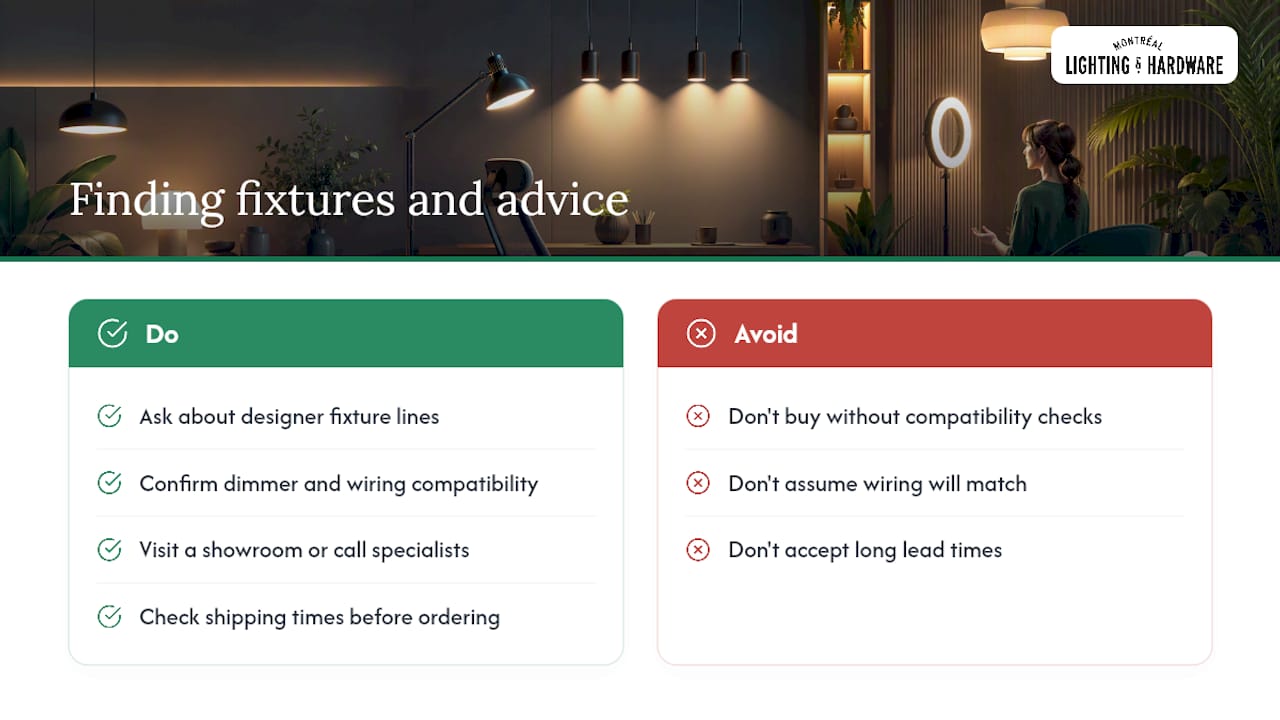
If you’re unsure whether a fixture works with your existing dimmer switch or wiring, a showroom visit or a quick conversation with lighting specialists can clear that up before you buy.
An Editor’s Checklist for a Camera-Ready Office
Start with the lamp, not the decor. That’s the single change most people notice first: swap a weak desk lamp for one with tunable color temperature and real lumen output, add a bias light behind the monitor, and dim your overhead fixture in the evening. One reader-adjacent example makes the point well: a windowless spare room with a bare ceiling bulb feels like a cave; the same room with a 4000K task lamp, a bias strip, and a warm accent lamp reads as an actual office.
For anything involving new wiring or a dimmer swap, bring in a licensed electrician or lighting specialist rather than guessing.
— Montreal Lighting & Hardware
Shop the Fixtures That Match These Specs
Certain specialized lighting suppliers offer a direct path to the fixture types this guide recommends, without the markup or the guesswork of hunting through generic retailers. Categories like tunable ambient pendants, high-CRI task lighting, and accent sconces are commonly stocked from designer lines such as Savoy House and Maxim, with trade pricing sometimes available for design professionals.
A Light Guide Ring LED pendant makes a strong ambient centerpiece for a taller-ceiling office, while a Zoom LED surface mount suits lower ceilings that need flush, even coverage. Browse the full lighting collection online, or visit the showroom in person if you want to check dimmer compatibility or color temperature side by side before you buy.
Sources
The technical guidance in this article draws on desk-level lux and lamp-selection standards from BenQ’s home office lighting guide, lamp-buying criteria from Linea’s desk lamp guide, video-call setup advice from Desklivo, and bulb and fixture guidance from The Spruce.
- Best Home Office Lighting for Programmers to Stay Focused | BenQ
- How to Choose a Desk Lamp for Your Home Office — Linea
- Home Office Lighting Setup (2026) | Desklivo
